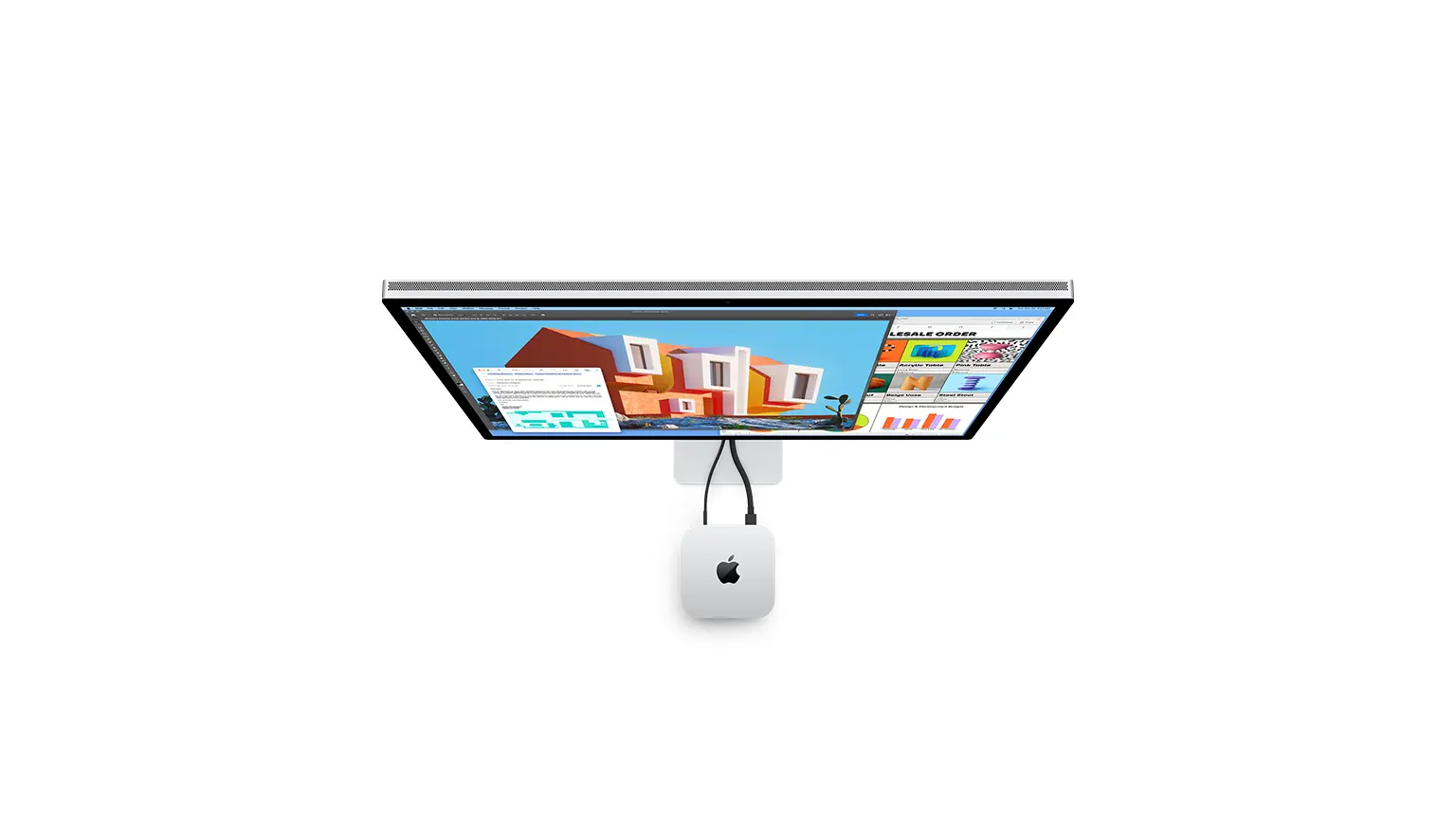
On August 25, 2026, Apple surprised the market by releasing refreshed Mac mini and Mac Studio models. These are the first computers with the new M6 chip, built using 2-nanometer manufacturing technology (the smaller this number, the more transistors — meaning “power” — fit into the same surface area of the processor), and the Mac Studio also gained the flagship M5 Ultra chip, the most powerful chip Apple has ever created. But behind all these numbers and names lies the question that businesses and freelancers actually care about: is this a real change in day-to-day work, or just another annual ritual of bumping up spec sheets?
What exactly changed?
The Mac mini can now be bought in two power tiers instead of one. The base version with the M6 chip has up to 12 CPU cores and 12 GPU cores (cores are, roughly speaking, the processor’s “hands” – the more of them working at once, the faster the computer handles multiple tasks simultaneously), plus a dual 16-core Neural Engine responsible for handling AI features directly on the device. This translates into memory bandwidth of up to 170 GB/s – that’s how much data per second the processor can “read” from the computer’s memory; the higher the number, the more smoothly demanding programs run, such as video editing or large spreadsheets. The pricier M5 Pro variant (despite the lower number in its name, it’s actually the more powerful one) offers up to 18 CPU cores, 20 GPU cores, and 64 GB of RAM with 307 GB/s of bandwidth. The computer’s design hasn’t changed – it’s still the same compact enclosure measuring 12.7 x 12.7 x 5 cm that Apple introduced in 2024.
The Mac Studio underwent a deeper overhaul. The lineup now includes a variant with the M5 Max chip (18 CPU cores, up to 40 GPU cores, up to 128 GB of RAM) alongside the brand-new M5 Ultra – created by fusing two M5 Max chips into one, even more powerful “brain” for the computer. This flagship chip offers up to 36 CPU cores, 80 GPU cores, a 32-core Neural Engine for AI tasks, and memory bandwidth of 1.2 TB/s (more than seven times that of the base Mac mini) – a 50% increase over the previous top-tier model. In its highest configuration, the computer can be equipped with up to 512 GB of RAM – enough to hold genuinely large AI models in memory – though this version won’t ship until late October.
Both computers also gained the newer Wi-Fi 7 and Bluetooth 6 wireless standards (faster, more stable connections without cables), Thunderbolt 5 ports for connecting drives and monitors at high data-transfer speeds, and a faster internal drive based on the PCIe Gen 6 standard.
What this means in practice: old vs. new Macs
Apple claims the Mac mini with M6 is up to 4.8 times faster than the 2024 model powered by the M4 chip, while the M5 Pro variant is up to 4 times faster than its M4 Pro predecessor. These are manufacturer-provided figures, so they’re worth taking with a degree of caution, but even with a generous margin of skepticism, this represents a substantial performance leap – larger than what Apple has typically offered in desktop computers within a single generation.
The Mac Studio’s case is more interesting. Compared to the previous top-tier model (the M3 Ultra from 2025), the new M5 Ultra is said to be up to 1.25 times faster in single-threaded tasks (for example, opening a single program) and up to 1.3 times faster when the computer is handling multiple tasks at once. The real difference shows up with artificial intelligence, though – Apple claims up to a 4.5-times boost in graphics processor (GPU) computing power for AI-related tasks. It’s this last figure – not raw processor power – that matters most for business use cases of this machine today.
Real benefits for businesses and professionals
What sets this generation apart from previous refreshes is a clear focus on running artificial intelligence directly on the computer – and that’s exactly where the biggest practical business benefits lie.
In-house artificial intelligence, without sending data to the internet. Thanks to up to 512 GB of RAM and 1.2 TB/s of bandwidth, the Mac Studio with M5 Ultra lets businesses run large-scale AI models directly on the computer – with no per-query cloud fees, no sending client data to external servers, and no dependence on whether the internet connection happens to be working. For law firms, medical practices, consultancies, or R&D departments handling sensitive data, this is an argument that can outweigh the price tag itself – it’s easier to safeguard client privacy and regulatory compliance (such as GDPR) when data never leaves the office.
A real speed boost for creative and technical teams. The Mac Studio with the M5 Max chip can drive up to five external displays at once, while the M5 Ultra version can handle up to eight, with smooth simultaneous playback of as many as 33 streams of 8K video (a resolution four times higher than the common 4K standard). This directly translates into smoother, faster work in video editing, color grading, or 3D design – tasks that used to require expensive, bulky workstations now fit into a far smaller and quieter enclosure.
Lower electricity and cooling costs. Apple computers have long stood out for delivering high computing power while using relatively little energy, and the new 2-nanometer manufacturing technology used in the M6 chip deepens that trend further. For offices and businesses running a dozen or several dozen workstations, this means real, measurable savings on electricity and cooling bills – especially for computers that run around the clock, such as development servers or rendering machines.
More options tailored to company size and budget. The fact that the Mac mini now offers a choice between two chip generations for the first time (the M6 or the higher-positioned M5 Pro) gives businesses real flexibility to match spending to the needs of a given role. An administrative or sales team can get by comfortably on the cheaper version, while developers or designers can benefit from the more powerful one – without having to jump straight to a much pricier Mac Studio.
Hardware that won’t age as quickly. Higher memory bandwidth and a faster PCIe Gen 6 drive mean these machines should keep up with growing software demands for longer. For IT departments planning hardware purchases over a 4-5 year horizon, this translates into real savings – computers will need replacing less often, directly lowering the total cost of ownership (TCO).
The flip side: prices have gone up noticeably
These computers offer the most value to businesses and professionals for whom on-premises AI work, handling large multimedia files, or strict data-privacy requirements are part of everyday operations – development teams building their own AI solutions, video post-production studios, design firms working in 3D, or law firms and financial institutions for whom sending data to external AI services is a non-starter.
It’s also worth noting that these are the last computers launched under Tim Cook’s tenure as Apple’s CEO – starting September 1, 2026, John Ternus takes the helm, and future product launches, including the new iPhone generation expected on September 9, will happen under his leadership.
If you’re weighing which configuration best fits your company’s needs, we invite you to purchase the new Mac mini and Mac Studio at INNERGO – we’ll help you choose the setup that matches your workload and budget.